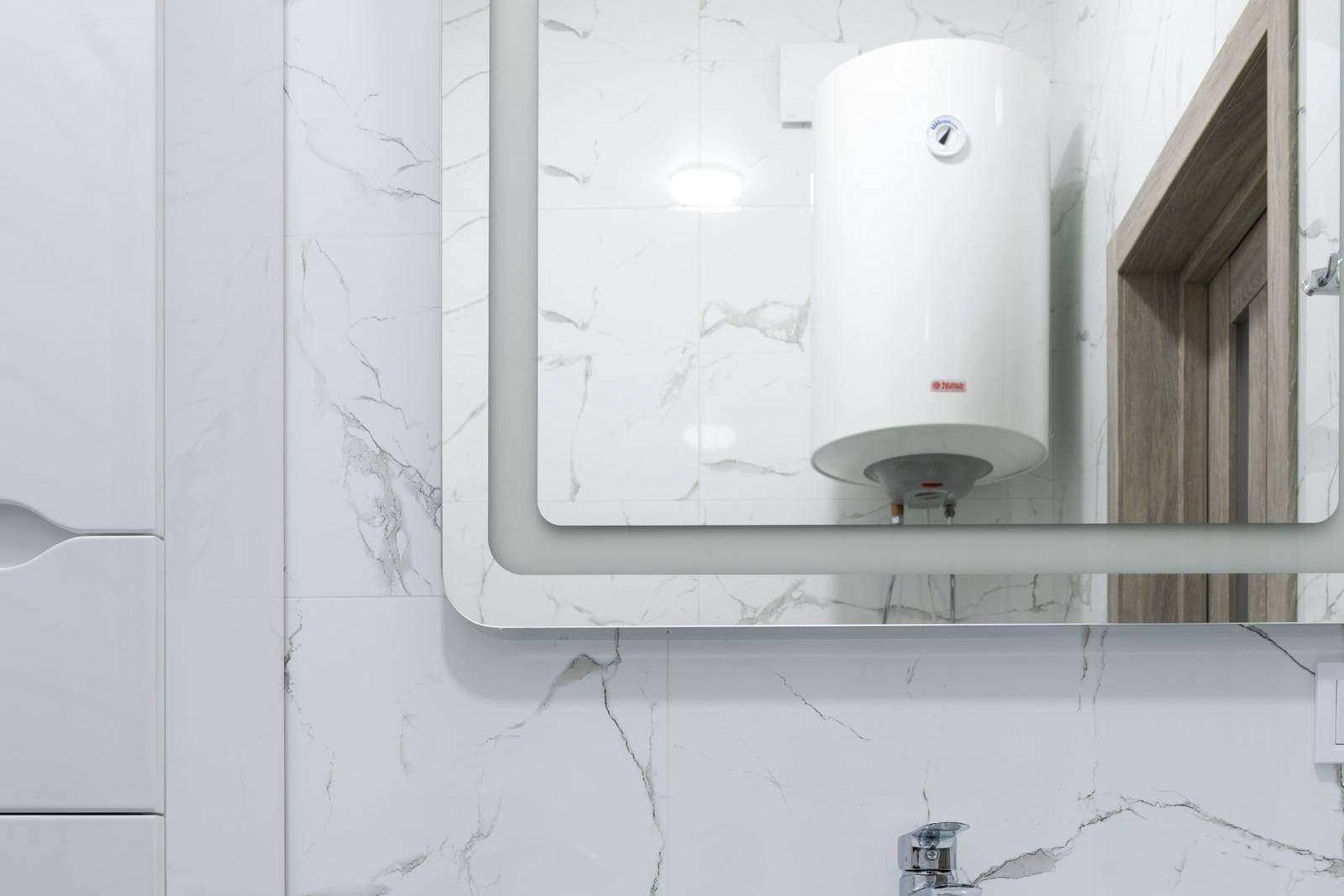
When a water heater becomes an emergency
Most water heater problems can wait for a scheduled visit. Three cannot: a tank that is leaking heavily, water spreading across floors, and a complete loss of hot water in a home with no backup. A leaking tank can release 40 or 50 gallons into a home, and in a Union County basement that water reaches the furnace, the electrical panel, stored belongings, and finished walls — damage that grows by the hour.
If water is spreading across your floor right now, skip the reading: turn off the water to the heater, turn off the gas or power, and request assistance. The steps below take two minutes. What follows is what counts as an emergency, and how emergency repair works in Union County — requests are shared with independent local providers.
What to do in the first hour
If the tank is leaking
1. Turn off the water supply to the heater. There is usually a shut-off valve on the cold-water line entering the top of the tank. Turn it clockwise to close it. If you cannot find it or it will not turn, shut off the home's main water supply. 2. Turn off the heat source. For a gas heater, turn the gas control knob to the off position. For an electric heater, switch off the breaker marked for the water heater. 3. Move valuables and protect floors. Towels and a wet-vacuum help with small amounts of water; a major leak needs the water stopped first. In a basement, lift anything stored on the floor and keep clear of the electrical panel if water is near it. 4. Do not try to drain a leaking tank yourself unless you know how — a tank under pressure can scald. Leave that to the provider.
If there is no hot water
Check the obvious first: the pilot light on a gas heater, the breaker on an electric heater, and the gas supply if other gas appliances are also out. If the pilot will not stay lit or the breaker trips again after resetting, stop and request assistance — repeated attempts can make the fault worse.
If you smell gas
Leave the home immediately and call your gas utility or emergency services from outside. Do not switch lights or appliances on or off, and do not try to relight a pilot. This site cannot help with a gas emergency — the utility is the right call.
If a pipe has frozen
A frozen pipe may not leak until it thaws, so a pipe that froze overnight can burst the next morning. If you suspect a frozen pipe near the heater, shut off the water to that section if you can, and request assistance before it thaws. Do not use an open flame to thaw a pipe.
What emergency repair covers
Emergency repair in Union County covers the failures that cannot wait: leaking tanks, flooding from a failed heater, burst connections, frozen and burst pipes near the heater, and sudden loss of hot water. The provider's first job is to make the situation safe — stop the water, isolate the heater, and prevent further damage. The second job is diagnosis: whether the heater can be repaired or must be replaced. A tank that has rusted through cannot be repaired, and in an emergency the honest answer is sometimes a replacement rather than a temporary fix.
Response depends on the provider's availability at the time of the request. This site does not promise a response time — it shares requests with independent local providers, and the provider who accepts the request discusses timing directly.
Why heaters fail suddenly here
Two Union County factors cause sudden failures. The first is winter: freeze stress and cold snaps split pipes and fittings, and a heater that loses power in a storm can freeze if the home goes cold. The second is age: many county homes still run original heaters installed when the home was built, and a tank past 10–12 years is living on borrowed time. Homes with cast-iron or galvanized piping add a third factor — restricted flow and pressure changes that stress the heater, and sediment that has been building for years before a weakened tank wall or a corroded fitting gives way.
Regular maintenance catches most of this before it becomes an emergency. Annual flushing, anode-rod checks, and a pre-winter freeze check are the items that most reduce the chance of a sudden failure in this county. See the maintenance page for details.
Frequently Asked Questions
My water heater is leaking a little. Is that an emergency?
A small drip from a valve or fitting can often wait for a scheduled visit, but a leak from the tank body will only get worse — a tank that is rusting through does not heal. If water is spreading or the leak is growing, treat it as urgent and shut off the water supply to the heater.
How much does emergency water heater repair cost?
It depends on the fault and whether repair or replacement is needed. Emergency visits can cost more than scheduled ones because of timing. The provider who responds gives the price before work starts. This site does not set prices.
Can a leaking water heater be repaired?
Leaks from valves, fittings, and connections can usually be repaired. A leak from the tank itself cannot be repaired reliably — the tank needs replacing.
Which areas do you cover for emergencies?
Elizabeth, Westfield, Summit, Linden, Plainfield, and 14 more Union County communities — 27 ZIP codes in total. The service area page lists the covered ZIP codes for each town.