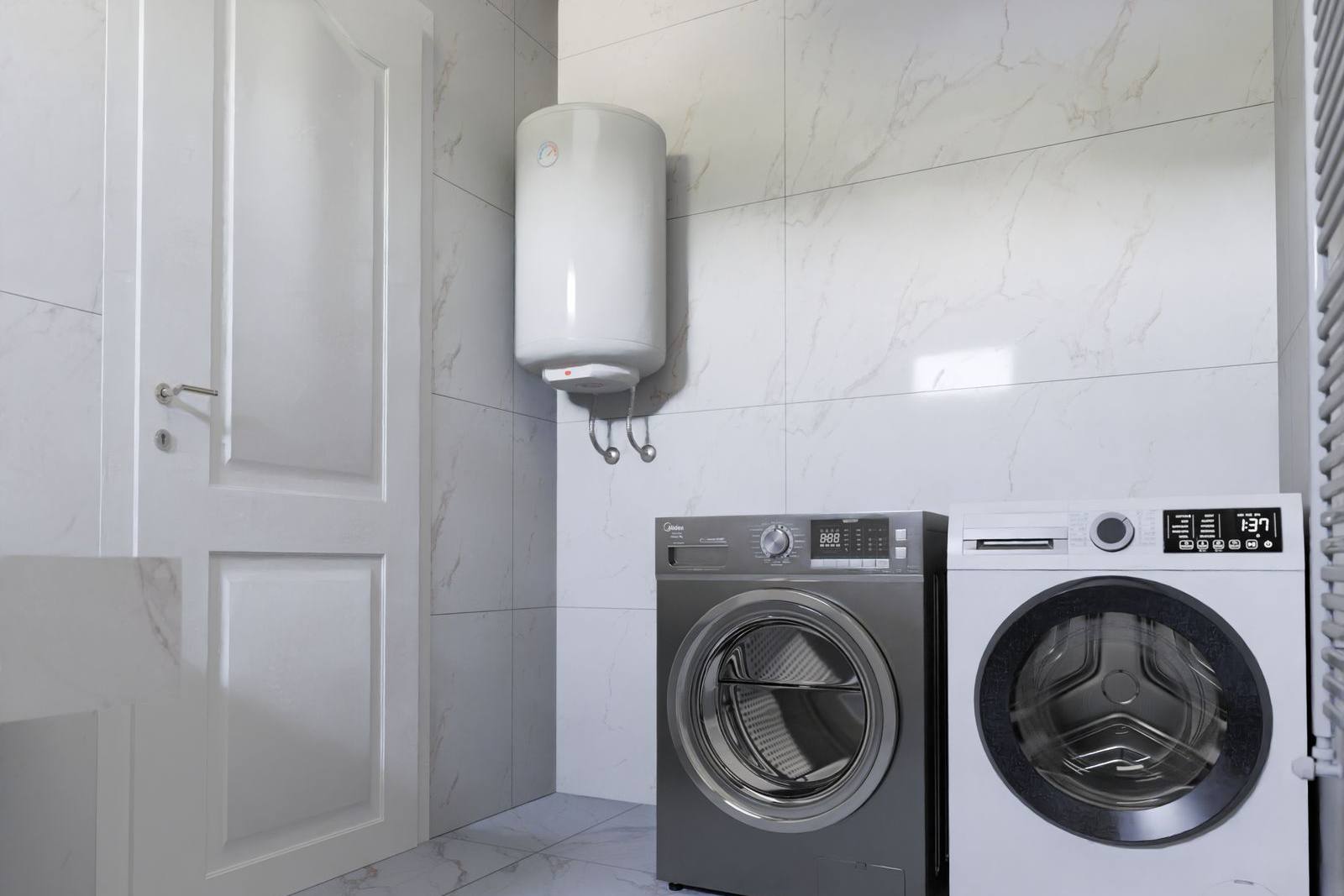
When replacement is the right call
A water heater does not last forever, and in a New Jersey basement its life is often shorter than the national average. Tank water heaters commonly last 8–12 years here. Replacement is usually the right decision when the tank itself leaks, when the unit is past its expected life and needs a major part, when repairs keep repeating, or when the heater is so inefficient that it costs more to run than a new unit would.
A leaking tank, or a heater past 12 years with a major fault, usually ends the same way: replacement. Here is how to choose the type and size, what a basement installation involves, and what it costs — with the actual quote coming from the independent local provider who responds to your request.
Tank or tankless?
Most Union County homes still use a tank heater, and for many it remains the practical choice: lower upfront cost, simple installation, and familiar technology. A 40-gallon tank suits a one- or two-bathroom home; a 50-gallon tank suits three bathrooms or a larger household. In Elizabeth's two-family homes, the household count matters more than the bathroom count — a heater serving two flats needs to be sized for both. Gas is common here; electric is an option where gas is not available, and heat-pump (hybrid) water heaters are increasingly installed in basements, where they also dehumidify the space.
Tankless units cost more upfront and may need a larger gas line and different venting, but they deliver hot water on demand and avoid the tank rusting out. They are worth considering for larger households. See the tankless page for the sizing and winter maintenance details that matter here.
Sizing: the mistake to avoid
An undersized tank runs out of hot water; an oversized tank wastes energy keeping water hot that nobody uses. Sizing depends on the number of bathrooms, the number of people, and whether high-demand appliances run at the same time. In a two-family home, it also depends on whether both flats draw hot water at the same hours. A provider should ask about the household before recommending a size — a quote that does not ask these questions is a quote to question.
What a basement replacement involves
A Union County replacement is usually a basement job, and basements add their own steps:
- - Access and drainage — the old tank has to be drained and carried out, often up basement stairs, and the new unit has to come down. A basement with a floor drain makes draining simple; one without needs a pump.
- - Venting and combustion air checked to current code — older flues and chimney vents sometimes need updating when a new unit is installed, and a basement that has been finished or sealed up may no longer supply enough combustion air.
- - A temperature-and-pressure relief valve with a proper discharge line, and an expansion tank where the plumbing system requires one.
- - Condensate handling for high-efficiency and condensing units — the condensate drain must run somewhere it will not freeze in winter.
- - Permits — ask the provider whether your town requires a permit for a water heater replacement. Many New Jersey municipalities do, and the installing provider normally handles the paperwork and inspection.
A replacement quote should include disposal of the old unit. If a quote does not mention it, ask.
What replacement costs
Replacement cost depends on the size and type of unit, the condition of the existing venting, gas line, and water connections, and whether the basement needs extra work such as a condensate pump or venting changes. Tankless installations cost more than tank installations, largely because of venting and gas-line work. These are general factors, not quotes: the actual price depends on the home, the unit chosen, and the permit. The provider who responds to a request gives the real figure, in writing, before work starts.
The replacement process
A typical replacement starts with shutting off the water, gas, and power, draining the old tank, and removing it. The new unit is set in place, connected to the water, gas, and venting, filled, and tested — including checking for leaks, confirming the burner or elements work, and verifying hot water at the taps. The old unit is removed for disposal or recycling. Most tank replacements are completed in a day; tankless conversions can take longer if gas or venting work is needed.
Frequently Asked Questions
How do I know my water heater needs replacing rather than repairing?
A leaking tank, an age of 10–12 years or more combined with a major fault, or repeated repairs are the usual signs. A single failed part on a newer heater is normally a repair.
Do I need a permit to replace a water heater in Union County?
It depends on the town — many New Jersey municipalities require one for a water heater replacement, and the installing provider normally handles the permit and inspection. Ask the provider to confirm for your town.
How long does a new water heater last?
Tank heaters commonly last 8–12 years in New Jersey, less without maintenance. Tankless units often last 15–20 years with regular descaling and freeze protection. Sediment and freeze stress shorten both without maintenance.
Can I replace a tank heater with a tankless unit?
Yes, but expect additional work: a larger gas line, different venting, and a condensate drain for condensing models. A site visit is needed to quote it accurately.