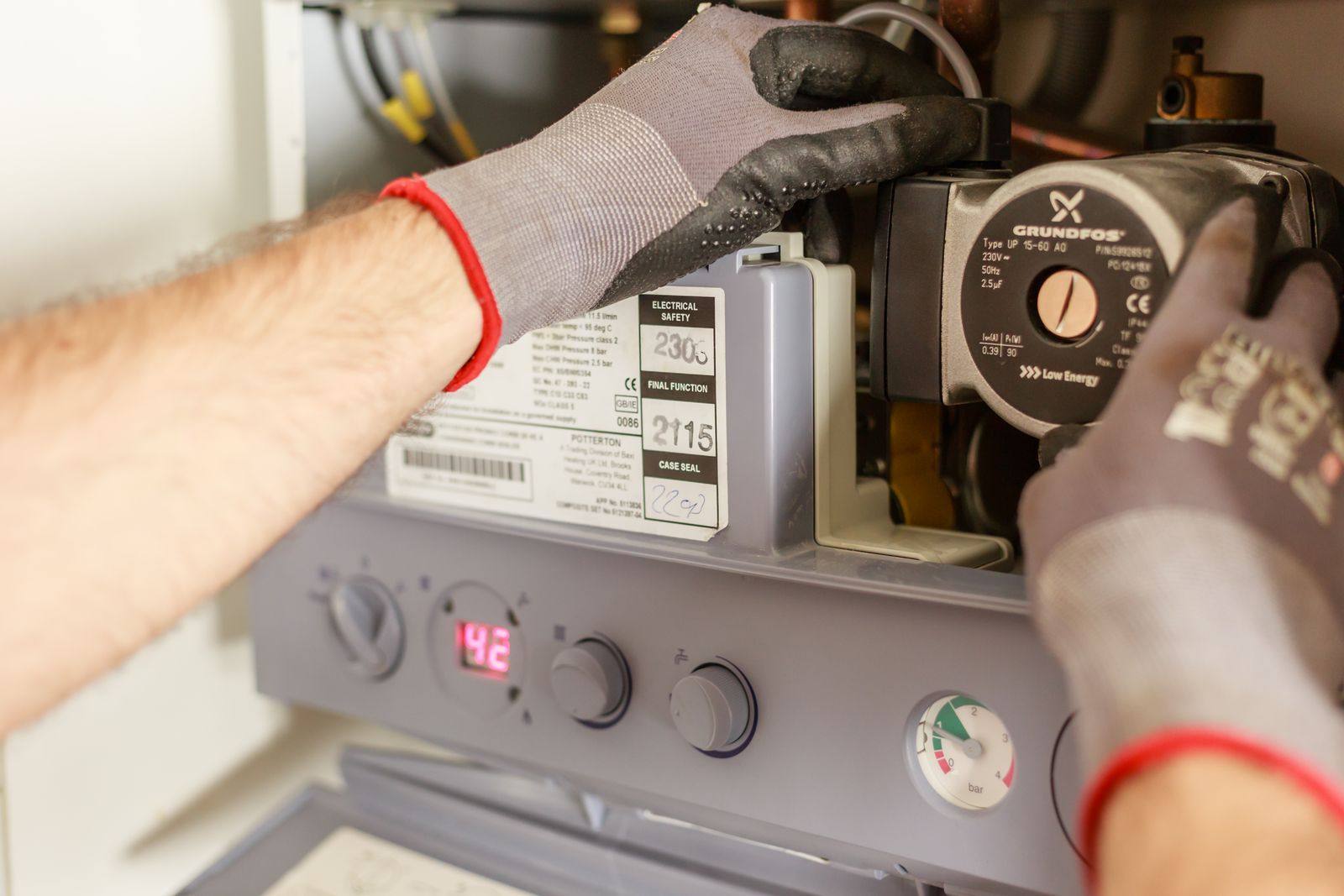
Maintenance matters more here than in most places
A water heater in Union County works hard every day of its life, and hardest in winter, when incoming water is at its coldest and the heater runs longest. Sediment settles in the tank, the anode rod wears out, and freeze stress works on pipes and fittings — unless someone flushes the tank, checks the rod, and prepares the heater for cold weather. Maintenance is not a sales add-on in New Jersey; it is the difference between a heater that lasts 12 years and one that fails at 8, or fails as a basement flood in January.
Annual flushing, anode-rod checks, and tune-ups for tank and tankless units across Union County — the maintenance that actually extends a heater's life here. It is an independent informational and lead-generation website — requests are shared with independent local providers.
Annual flushing: the most important job
Flushing means draining the tank to remove sediment. Sediment builds up over years of use, and once it hardens into a crust at the bottom of the tank it is difficult to remove. Annual flushing keeps it from reaching that point. The signs that flushing is overdue are familiar to Union County homeowners: popping or rumbling noises when the burner fires, hot water that runs out faster than it used to, and a heater that seems to work harder for the same result.
A maintenance visit normally includes a full flush, a check of the drain valve (which itself can clog with sediment), and a check of the water temperature and thermostat settings.
The anode rod: the part that saves the tank
The anode rod is a metal rod inside the tank that corrodes in place of the tank itself. It is the reason a steel tank full of water does not rust through in a few years. Anode rods are consumed over time — sometimes in as little as 3–5 years. Once the rod is gone, the tank starts corroding, and there is no warning until it leaks.
Checking the rod means removing it and inspecting how much metal is left. Replacing it is straightforward and inexpensive compared with replacing a tank. A maintenance visit should include an anode-rod check, and the rod's condition is one of the most useful facts about a heater's remaining life.
The pre-winter check: the Union County item
Before the first deep freeze, a maintenance visit should cover the cold-weather items that other regions never think about:
- - Exposed pipes near the heater insulated, especially where they run along an exterior basement wall
- - The heater not sitting in a draught from a broken basement window, an unsealed vent, or a bulkhead door that does not close
- - The temperature-and-pressure relief valve tested, and its discharge line checked for a clear path to a drain
- - For a tankless unit, the freeze-protection function confirmed working and the drain procedure explained, in case of a power outage during a storm
A heater that has been checked in October is far less likely to become an emergency in January.
What a tune-up includes
A full maintenance visit for a tank heater typically covers:
- - Flushing the tank and checking the drain valve
- - Inspecting and, if needed, replacing the anode rod
- - Testing the temperature-and-pressure relief valve
- - Checking the thermostat setting (120°F is the usual recommended setting) and the burner or elements
- - Inspecting the venting or flue and the gas or electrical connections
- - Checking exposed pipes near the heater for insulation before winter
For a tankless unit, the equivalent visit is a descaling flush of the heat exchanger, plus checks of the igniter, sensors, and filters. See the tankless page for why descaling and freeze protection are essential here.
How often?
Once a year is the usual recommendation for a tank heater in New Jersey, and once a year for descaling a tankless unit — ideally in the autumn, before the heating season. Homes with a water softener may stretch the interval; homes with very hard water or older heaters should not. The manufacturer's manual and the provider's advice for your specific unit are the best guide.
Signs maintenance is overdue
- - Popping, rumbling, or banging noises from the tank
- - Hot water that runs out sooner than it used to
- - Rusty-coloured hot water
- - A heater that is 8 or more years old and has never been flushed
- - An anode rod that has never been checked
Any of these is a reason to request a maintenance visit rather than waiting for a failure — especially the last two, because a heater that fails from corrosion usually fails as a leak, and a leak in a basement is an emergency.
Frequently Asked Questions
How much does water heater maintenance cost?
It depends on the heater type and what is included — flushing only, or flushing plus an anode-rod replacement. Maintenance is normally far less than a repair or a replacement. The provider who responds to a request gives the price.
Can I flush my water heater myself?
It is possible, and the manufacturer's manual explains how, but there are scalding and flooding risks if the drain valve is clogged or the relief valve is faulty. If you are not comfortable with the procedure, leave it to a provider.
Does maintenance really extend a heater's life?
Yes — flushing and anode-rod replacement are the two maintenance items with the clearest effect on tank life, and descaling has the same effect on tankless units. No maintenance can make a rusted-through tank last longer, which is why it should be done before the tank fails.
How do I know if my anode rod is worn out?
It has to be removed and looked at. If your heater is more than 3–5 years old and the rod has never been checked, it is worth having inspected at the next maintenance visit.