The house is half the water heater problem
Union County's housing stock is older than most of New Jersey's. Elizabeth's two-family houses, Westfield's and Summit's pre-war colonials, Plainfield's Victorians, and Linden's older homes near the industrial corridor were mostly built long before modern plumbing code — and the water heater in one of these homes is connected to pipes, drains, and vents that are as old as the house. A heater that keeps failing in an older home is often not a bad heater. It is a good heater fighting old plumbing.
Here is what older Union County homes do to water heaters, and which fixes actually help. It is general guidance, not a quote or a guarantee.
Cast-iron drains and older supply lines
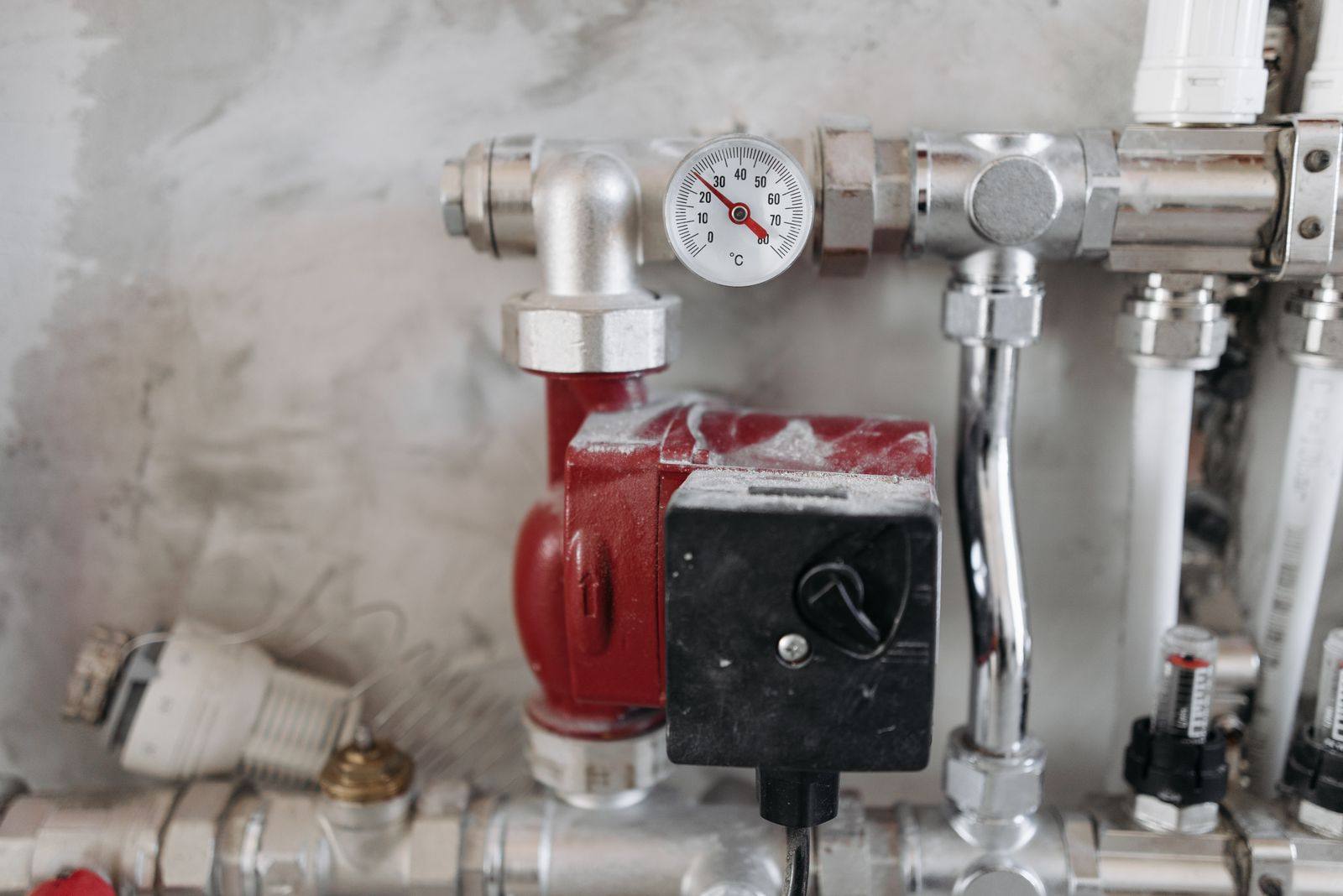
Many pre-war homes still have cast-iron drains and galvanized or early copper supply lines. Cast iron corrodes from the inside, narrowing the pipe; galvanized steel does the same, and the corrosion flakes can travel into the heater and clog valves and fixtures. The result is restricted flow: a new heater performs worse than it should, hot water arrives slowly, and the heater works harder for the same result.
When a replacement is planned in an older home, the supply lines feeding the heater should be inspected at the same time. Replacing a short run of corroded pipe at the heater is a small job compared with replacing the heater itself, and a new unit connected to corroded piping inherits the old unit's problems.
Basement installs: what is different
Almost every Union County heater lives in a basement, and older basements have their own complications. The floor may not be level, the ceiling may be low, and the venting may run through a chimney that also serves a boiler or furnace. Older chimneys can be oversized for a modern, efficient heater, which leads to condensation inside the flue and corrosion over time — a problem that only shows up years after the installation.
A basement that has been finished since the house was built adds another layer: a finished basement may have sealed off the combustion air the heater needs, and a leak in a finished basement damages living space rather than an empty cellar. A replacement visit in an older home should include a check of the venting, the combustion air, and the relief-valve discharge line.
Freeze risk in older homes
Older homes leak air. Basement windows that do not close properly, bulkhead doors with gaps, unsealed vents, and pipes running along exterior foundation walls all let cold air reach the heater and its pipes. A cold snap can freeze a pipe that has survived for decades, and a frozen pipe may not leak until it thaws — so a pipe that froze overnight can burst the next morning.
The fixes are unglamorous and effective: insulate exposed pipes near the heater, seal the draughts around basement windows and bulkhead doors, and keep the basement above freezing through the winter. A pre-winter check in October is worth more in an older home than in a new one.
Sizing for older, larger homes
A pre-war colonial with three or four bathrooms, or a Victorian divided into flats, needs more hot water than the 40-gallon tank it was fitted with decades ago. The symptom — hot water running out mid-shower — is often blamed on the heater when the real cause is a unit that was never sized for the house. In a two-family home, the load is two households, not one.
Replacement is the moment to fix the sizing. A 50-gallon tank, a heat-pump hybrid, or a tankless unit are the usual options, and the choice depends on the household, the gas supply, and the venting. See the replacement page for how sizing should be worked out, and the tankless page for the winter care a tankless unit needs here.
What actually helps in an older home
- - Annual flushing of tank heaters, before sediment hardens into a crust.
- - Anode-rod checks every few years, and replacement when the rod is worn — the cheapest way to extend a tank's life.
- - A pre-winter freeze check — insulation on exposed pipes, draughts sealed, the heater's surroundings checked.
- - Supply-line inspection at replacement time, so a new unit is not connected to corroded piping.
- - Venting and combustion-air check at replacement time, especially where the flue is shared with a boiler or furnace.
- - Temperature setting — keeping the thermostat at 120°F reduces scale formation compared with higher settings, and is also safer against scalding.
What does not help is replacing the heater and ignoring the house around it. A new heater on old plumbing fails the same way the old one did — which is why the provider who quotes a replacement in an older home should be looking at the pipes and the venting, not just the unit.
Frequently Asked Questions
My older home keeps running out of hot water. Is the heater broken?
Not necessarily — the heater may be undersized for the house, or sediment and restricted flow from old piping may have cut its usable capacity. A provider can check the tank size against the load and the condition of the supply lines.
Should I replace the pipes when I replace the heater?
Not the whole house — but the supply lines feeding the heater should be inspected, and a short run of corroded pipe replaced at the same time as the heater. It is a small job that protects the new unit.
Why does my basement water heater freeze in winter?
Older basements leak cold air through windows, bulkhead doors, and unsealed vents, and pipes along exterior walls are exposed to it. Insulating exposed pipes and sealing the draughts is the fix, and a pre-winter check catches it before the first deep freeze.
Is a tankless unit a good idea in an older home?
It can be, for a larger household — but the gas line may need upsizing, the venting is different, and the unit needs freeze protection and annual descaling. A site visit settles whether the house can support it before any purchase.