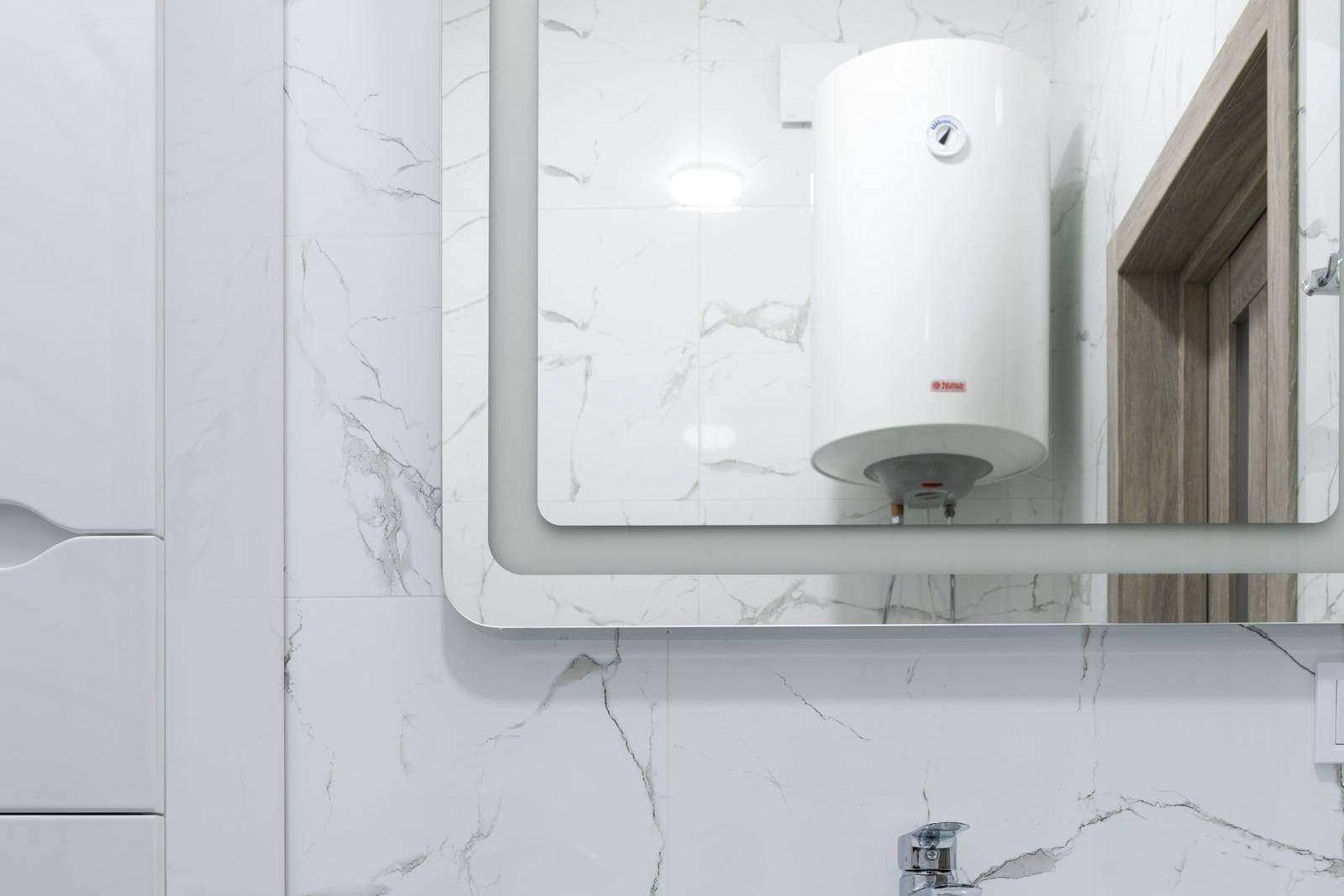
Water heater repair in Summit
Summit sits on the ridge of the Watchung Mountains in the north-west of Union County, an affluent suburb of pre-war colonials, Tudors, and foursquares grouped around a walkable downtown and the train line to New York. Its houses are older than most in the county, their basements deeper, and their water heaters older on average — a combination that makes Summit's heater problems distinct from the dense two-family stock of Elizabeth or the postwar homes of Linden.
Repair, replacement, and maintenance in Summit — accepted in both ZIP codes where coverage is verified: 07901 and 07902. Requests from these ZIP codes are shared with independent local water heater providers.
Summit's water heater problems
The most common Summit problem is age meeting size. A pre-war colonial with three bathrooms and a large household needs more hot water than the 40-gallon tank it was fitted with, and the symptom — hot water running out mid-shower — is often blamed on the heater when the real cause is a unit that was never sized for the house. Summit's hillside setting adds its own wrinkle: homes on the ridge sit at different elevations, and water pressure can vary from street to street, which affects how a tankless unit performs and how a tank refills.
The second factor is the housing stock itself. Summit's older homes often still have cast-iron drains and early copper or galvanized supply lines, and corroded piping restricts flow and makes a new heater perform worse than it should until the piping is addressed. Sediment builds up in tanks that have never been flushed, anode rods wear out unnoticed, and a tank past 10–12 years in a Summit basement is living on borrowed time.
Winter is the third factor. Summit sits higher than the rest of the county and catches colder air off the ridge, so its basements run colder and its pipes freeze sooner. A heater in a basement corner near a foundation wall, or with pipes running along an exterior wall, is vulnerable in a long cold snap — and Summit's finished basements mean a leak or a burst pipe does its damage to living space, not to an empty cellar.
Repair, replacement, or maintenance?
- - Repair is usually right for a newer heater with a single failed part — a thermostat, heating element, thermocouple, gas valve, or relief valve.
- - Replacement is usually right when the tank leaks, when the heater is 10–12 years old and needs a major part, or when repairs keep repeating. In a larger Summit home, replacement is also the moment to fix the sizing — a 50-gallon tank, a heat-pump hybrid, or a tankless unit, where a smaller tank has been running out for years.
- - Maintenance — annual flushing and anode-rod checks, plus a pre-winter freeze check — is what keeps a Summit heater from becoming an emergency. See the maintenance page for what a tune-up includes.
A replacement in a pre-war home should include a check of the venting and the condition of the supply lines feeding the heater, because a new unit connected to corroded piping inherits the old unit's problems. Ask the provider whether your town requires a permit — many New Jersey municipalities do, and the installing provider normally handles it.
What to include in a request
The more specific the request, the better the provider can prepare: gas or electric, tank or tankless, approximate age of the heater, the number of bathrooms, and the symptoms (no hot water, not enough hot water, leak, noise, smell, error code). The contact page has a form for exactly this — it is currently not yet monitored while lead routing is being set up, and the notice on the form says so.
Frequently Asked Questions
Which Summit ZIP codes do you cover?
07901 and 07902 — 2 ZIP codes in total.
My Summit home keeps running out of hot water. Is the heater broken?
Not necessarily — in a larger pre-war home the heater may simply be undersized for the number of bathrooms and the household's simultaneous use, and Summit's colder winter water makes an undersized unit show its limits sooner. A provider can check the tank size against the load and whether a larger unit or a tankless system would fix it.
How long does a water heater last in Summit?
Tank heaters commonly last 8–12 years, and age and sediment shorten that without maintenance in pre-war homes. Tankless units often last longer, but only with regular descaling and freeze protection.
Do you also cover nearby towns?
Yes — Elizabeth, Westfield, Linden, and Plainfield each have their own page, and the service area page lists every covered ZIP code in the county.